Showing posts with label health. Show all posts

Tuesday, January 3, 2017

Elevate Health Chiropractic wishes you a happy New Year!

It's a brand new year! Hoping everyone had a fun & safe holiday. As we start 2017, here are five good reasons why chiropractic care should be included in your New Year's resolution! 
#chiropractic #health #wellness #newyearnewyou


Thursday, August 11, 2016

Sports and Chiropractic Care

Photograph by: Philip Montgomery, The Ultimate Scrum, for the New York Times
  Have you been suffering from a sports related injury? Are you looking for ways to improve your endurance and mobility at the gym or on the team? Chiropractic care may be just what you're looking for!
  Sports and exercise are great ways to keep healthy, but there are often risks involved. Most often, excessive training, inappropriate training methods or perilous exercise equipment can be a cause of injury. However, structural abnormalities and muscle imbalances/weakness can also be culprits leading to injury, including the ankles, knees, elbows, shoulders or spine.
  Chiropractors are trained to assess, diagnose and manage sports-related injuries as part of their core competencies. In fact, through a comprehensive history and physical examination, chiropractors can help determine the cause of pain and dysfunction as well as recommend an appropriate plan of management.
  Conservative care offered by chiropractors, dependent on the injury and mechanism, may include joint manipulation and mobilization, soft tissue therapies, adjunct modalities, rehabilitation and individualized exercises and lifestyle advice to restore proper function, enhance healing of damaged tissue and reduce pain.
  Give us a call or visit our South Burlington office to schedule an adjustment today with Dr. Paul Samuel. Stay strong and elevate your health! Don't forget to like us on Facebook!
www.elevatehealthchiropractic.com (802) 557-8568

Tuesday, August 9, 2016

What is Chiropractic care?

If you haven’t visited a chiropractor before, you might be missing out. Millions of people around the world have experienced the incredible benefits of chiropractic care.
One of the best things about chiropractic care is it’s a drug-free and surgery-free path to healing naturally.
People have reported chiropractic benefits help to improve:
  • Back pain
  • Headaches
  • Ear infections
  • Neck pain
  • Arthritis and joint pain
  • Scoliosis
  • Asthma
  • Blood pressure
  • Healthy pregnancy
  • Organ function
  • Surgery prevention
There are a lot of misconceptions about chiropractic practices and how chiropractors are trained. In fact, did you know many chiropractic programs also incorporate an entire year of PhD-level advanced nutrition training?
However, most of the benefits of seeing a chiropractor come from getting a chiropractic adjustment.
Dr. Paul Samuel can provide adjustments, nutritional and supplemental care, and a drugless approach to pain management. Elevate your health, and get adjusted today by calling (802) 557-8568, or stop by our South Burlington office.
Stay strong and balanced!

Monday, August 8, 2016

New Partnership: Elevate Health Chiropractic and Body Therapy


South Burlington chiropractor, Dr. Paul Samuel DC at Elevate Health Chiropractic llc, is excited to announce massages are now available at our office. We have been serving exceptional chiropractic care to the greater Burlington and Shelburne areas for the past 2 years, and during this time, we have been searching for the right massage therapist to join our team. This August, we are happy to announce Body Therapy LLC, with DeAnna Bevilacqua, has recently become a part of our wellness family and will be offering services specializing in deep-tissue, Swedish, and Thai massage. Check out her website: 
http://bodytherapyllc.massagetherapy.com/home (518) 331-6380

To commemorate this special occasion, we are raffling off a 1-hour custom massage with our new partners Body Therapy! The drawing will be live on 9/20/16, and entries can be made via Facebook. Like this post to be entered once, or share for 2 entries. Give us a call for more information or to schedule an ‪#‎adjustment‬.

Stay ‪#‎healthy‬ and ‪#‎balanced‬ ‪#‎VT‬www.elevatehealthchiropractic.com (802) 557-8568

Wednesday, June 8, 2016

Good posture is good for our mental health

Our emotional and mental states depend on our posture. With smartphones, tablets, and computers becoming a more prevalent part of our daily lives, it's important to be aware of the short and long term damage our precious devices can be causing us.
Here are some great tips on restoring proper posture (see the Huffington Post article here):
  • Stretch your chest, roll back your shoulders
  • Strengthen the upper back with planking
  • Work on your back’s flexibility and your spine’s mobility
  • Stretch the hip flexors (tight hip flexors cause hip and back pain)
  • Work on strengthening your glutes with squats
  • Stretch your hamstrings and calves (forward bend, knees slightly bent)
  • Get adjusted for optimal posture
Regular adjustments help keep your spine healthy and flexible. South Burlington chiropractor Dr. Paul Samuel, at Elevate Health Chiropractic can advise you on your posture, and recommend stretches and exercises to maximize your health and lifestyle! ‪#‎VT‬ ‪#‎posture‬ ‪#‎chiropractor‬ #Burlington #wellness


Thursday, April 14, 2016

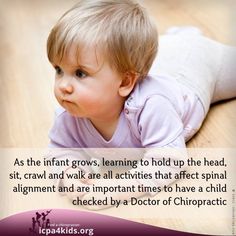
Children and Chiropractic Care


Five Myths About Chiropractic Care for Children

Chiropractors who provide care for children – and families – can attest to the many benefits of a healthy spine to a growing child. However, this relatively new area of focus for chiropractic is susceptible to many misconceptions, among the public and the health-care community.
Many of the public perceptions about chiropractic care for children, however, are far from the truth. We explore these misconceptions and spoke to the experts to get the real facts about this thriving chiropractic focus area.
Myth #1 Chiropractic care of children is new.
When some individuals first learn that DCs treat children as well as adults, they may get the wrong idea that chiropractic for kids is new – which is to say untested, experimental and dangerous.
nakedbaby-e1373928186106-538x218That isn’t the case. Sure, the modern era of this field dates only as far back as the 1980s. But the fact is, the practice actually has much older and stronger roots. “If you go back to 1910, [founder of chiropractic] D.D. Palmer indicated how important it is to check a child’s spine from birth and throughout life,” notes Jeanne Ohm, CEO of the International Chiropractic Pediatrics Association (ICPA), a non-profit organization in Philadelphia.
By the 1980s, many DCs had developed their practices to treat adults specifically. In 1986, Dr. Larry Webster in the U.S. helped re-establish chiropractic care for children as a legitimate area of focus. He started teaching his child-friendly techniques, and he created the ICPA to further help chiropractors treat children.
Webster passed away in 1997, but his legacy continues. The ICPA now has more than 4,000 members and hundreds of DCs are studying to become chiropractors with a special focus on kids.
Myth #2 Children don’t need chiropractic care.
DCs who treat kids often hear questions along these lines: Why in the world would a child need to see a chiropractor? What good does chiropractic do for a toddler, or even a newborn?
Chiropractors have a few good answers.
judy-1web“We may see a one-week-old child who is already showing signs of favoring, turning her head to one side versus the other,” says Dr. Judy Forrester, owner of Synergea Family Health Centre, a multidisciplinary clinic in Calgary, Alta. “That may seem minimal… but if we can determine any imbalances or asymmetry with the muscular function or the joint alignment, and we address it early, it’s better. Once those postural patterns and habits develop as they grow, they can be much more difficult to change.”
Dr. Liz Anderson-Peacock is a Barrie, Ont., chiropractor who focuses on care for children. She notes the link between the central nervous systems and various childhood afflictions.
“Children may have symptoms like ear infections, difficulty breathing, colic, attention deficit. We do not treat those things per se. We see those as expressions of the body not interpreting the world properly,” explains Anderson-Peacock, who also serves in the editorial board for the Journal of Maternal, Pediatric and Family Health.
“The organizing system for us to respond to the world is the nervous system. The questions we ask are: if there is something going on with the nervous system, what is it, and can chiropractic care help?”
Anderson-Peacock now spends most of her time travelling around the world doing lectures and other speaking engagements. She also conducts seminars for the ICPA about chiropractic care for children and families.
Ohm from the ICPA links chiropractic to the very moment a child emerges from the womb. “Birth can be traumatic,” she says. The event could cause physical damage that leads to difficulties later. So if a baby develops breathing trouble, “the real cause may simply be a misalignment to the spine from the birth process. Parents who get that will stop at the clinic on the way home from the birth centre to make sure everything is OK.”
Myth #3 Chiropractors use the same techniques on children as adults.
“That’s what terrifies a lot of chiropractors about adjusting children, as well as parents,” Anderson-Peacock says. “They think we’re going to adjust them like an adult.”
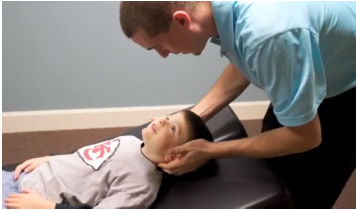
DrLiz_007_5x71-460x460But DCs who treat children do not apply heavy pressure. “Often, it’s a matter of moving the child into a position of ease, holding that position and things will reset quite nicely on their own,” Anderson-Peacock says. Care, she points out, is nowhere near as forceful as it may be for adults.
“That’s why extra training is so crucial. These children are not like miniature adults. For example, spines are primarily cartilaginous until the age of six, and we know cartilage will deform when we have abnormal function. So we want to make sure that function is restored normally. And since the bones are immature, the alignment issues are different. We want to minimize rotations and traction, because children have different needs, due to the immaturity of their musculoskeletal and ligamentous structures.”
The ICPA aims to validate techniques for chiropractic care for children, particularly to help dispel the idea that DCs use the same pressure on kids as they do on adults, Ohm notes. The organization is working with Walter Herzog, co-director of the Human Performance Laboratory at the University of Calgary, to study the pressure required when caring for children. The report should be out by the end of 2015.
Myth #4 There are no real experts in chiropractic care for children.
In Canada, chiropractic care for children is not a recognized area of specialty, which leads some people to think there are no genuine experts in the field. But that isn’t true.
Many DCs follow accredited courses to develop child-specific skills. Anderson-Peacock spent three years studying at the International Chiropractors Association’s Council on Chiropractic Education (CCE)-accredited program in pediatric chiropractic. She achieved her Diplomate in Clinical Chiropractic Pediatrics (DICCP) in 1996.2e8a889f123a5820844ea86b019e2e61
Dr. Stacey Hornick is owner of Market Mall Family Chiropractic in Saskatoon, Sask. She attended McTimoney College of Chiropractic, operated by BPP University – a post-secondary institution in London, England. Over three years, she took courses by correspondence and traveled to Thailand, Hong Kong and Australia to complete the residency portion of the program. Having succeeded in her studies last year, she was granted a master’s degree in Chiropractic Paediatrics.
Hundreds of DCs have taken the ICPA’s programs. The ICPA Diplomate Programinvolves a total of 400 hours of learning and achieved through the successful completion of two levels of study.
The first part – a 200-hour certification program – involves 14 classroom modules, participation in two ICPA Practice Based Research Network projects, and successful completion of the comprehensive certification  final exam.
The second part is a 200-hour advanced competency program. It requires 200 hours of work with more emphasis on research, including either a published research case study or a publishable thesis, as well as clinic work. Enrollment in the first level (200-hour certification program) is a prerequisite to enroll in part two.
Chiropractic care for kids may not be a recognized specialty in Canada, but chiropractic associations recognize it as a legitimate area of focus.
In a statement, the Alberta College and Association of Chiropractors (ACAC) has acknowledged, “chiropractic treatment is as beneficial to children as it is to adults and that the efficacy and benefits of the delivery of chiropractic care to individuals 18 years of age and under are well supported by a body of ongoing research and documented case histories.”
Myth #5 Chiropractors don’t collaborate with pediatricians and medical doctors.
Hornick says this simply isn’t the case.
“I often refer pediatric patients to their medical doctors and to medical specialists, and we communicate clearly in the best interests of the child. I see our roles as complementary.”
Forrester also says she has good ties with medical doctors. “The majority of them are very much in favor of working together. Every once in a while you run into someone who thinks we’re all a bunch of quacks and they’re not up to date with the sorts of things we do. But by far the relationship with pediatricians is healthy and puts the patients’ best interests first.”
Reality recap
Chiropractic care for kids is not new. Children benefit from chiropractic care. Techniques for children are safe and nowhere near as forceful as they may be for adults. Many DCs are qualified experts, and many child-focused chiropractors establish strong connections with medical doctors. The truth is, DCs can and do share the benefits of their profession with patients across the entire age spectrum.2599369
Mastering pediatrics
Late last year, Dr. Stacey Hornick, a Saskatoon, Sask.-based DC focused on chiropractic care for children became one of the first Canadians to attain a Master’s of Science in Chiropractic Paediatrics.
She studied at McTimoney College of Chiropractic, operated by BPP University, a post-secondary institution in London, England. The McTimoney program is the only pediatric chiropractic program that meets the academic requirements for entry into doctoral studies (PhD) in the specific content area of chiropractic pediatrics, an opportunity never before afforded the chiropractic profession, she says.
“For me, it was important to seek out a highly respected qualification in pediatric care,” Hornick says. “There were no university-accredited courses in pediatrics in North America that I was aware of at the time. I liked the idea of studying abroad and at the same time becoming an expert in pediatric-specific assessment, and adjusting techniques that were gentle yet neurologically precise.”
It takes stamina and smarts to get into and complete this tough three-year course. Read on for the requirements. Do you have what it takes?
To enter the program, a candidate must have: a professional qualification in chiropractic and registration with a relevant chiropractic governing body
In each of the first two years of the program, the student must complete:
  • Work at two residential schools – Hornick explains that usually, students complete their residencies at U.K. chiropractic facilities, but McTimoney also gives students the chance to practice outside of the U.K. For her part, Hornick completed her first-year residency in Thailand, which was memorable. “We stayed at the Children of the Golden Triangle Training Center. It’s a safe haven when kids can go to school and avoid the whole child-trafficking danger, which is a heart-wrenching reality in that part of the world. Many of the children at the facility were orphans – 450 of them. We got to stay with them, and between five chiropractors, we adjusted all of them in three days.”
  • Online course work – Subjects range from the fundamentals of chiropractic pediatrics to specific requisite topics. Hornick says first-year courses include substrates of chiropractic pediatrics, physical assessment in chiropractic skills and pediatric neurology. “The second year is more application of knowledge.” Courses include normal and variant radiology anatomy in pediatrics, clinical research methodology, and four clinical pediatrics programs.
  • Structured clinical education, directed and self-directed
  • Objective structured clinical exam
In the third year of the program, students must complete a research project, including project design, implementation and report at a publishable standard. Hornick’s dissertation: The Effect of Chiropractic on Cortisol Levels in Infants with Colic. The investigation aimed to help doctors understand why chiropractic adjustment has a positive influence on colicky infants. Hornick found that infants with colic who receive chiropractic care demonstrate salivary cortisol release patterns similar to those seen in infants with no colic.


Thursday, March 31, 2016

Ease Pain Through Meditation


A Military Pilot Study Shows How Mindfulness Can Help Ease Pain

It could help heal so many invisible wounds.


ZENSHUI/ANTOINE ARRAOU VIA GETTY IMAGES
You can’t change chronic pain, but you can change the way you respond to it, finds a new study. 
Mindfulness meditation may help combat veterans with traumatic brain injury manage their chronic pain, according to a small but promising pilot study published in the journal Military Behavioral Health. 
An estimated 44 percent of U.S. combat veterans and 26 percent of Americans in general suffer from chronic pain, a condition in which pain persists for longer than 12 weeks and in some cases for a lifetime. If the pilot study’s results are borne out in future research, the military will have an effective and economical tool to help treat soldiers who return from the field with lifelong pain, says Thomas Nassif, a researcher at the Washington D.C. Veterans Affairs Medical Center and professorial lecturer at American University. 
What’s more, this mindfulness therapy could apply to civilians with pain problems, providing another way to supplement traditional therapies like pain medication, psychological counseling and surgeries or implants. 

Meditation resulted in a 20 percent decrease in pain

Nassif tested a particular mindfulness meditation program called Integrative Restoration Yoga Nidra, or iRest, which focuses on breathing exercises, guided imagery and progressive relaxation. Because of promising but preliminary research on iRest, it is already offered as an “educational class” (read: not official therapy) at VA medical centers and other active-duty military facilities nationwide.
But Nassif’s pilot is the first time it has been tested for its effect on chronic pain. Past research has shown that iRest can help decrease PTSD symptoms and emotional reactivity in vets, but these studies did not have case control groups, he noted.
The participants in Nassif’s study were all male combat veterans of wars in Afghanistan, Iraq, Kosovo and Bosnia. They had all experienced traumatic brain injury during their service and returned to the U.S. with chronic pain. In order to isolate the effects of the meditation, the researchers excluded all men who already seemed to be self-medicating on some level: those who drank a certain amount of alcohol, had used illicit drugs in the past month, relied on prescription medications known to alleviate pain or who were already regular meditators.
That left nine people, who formed two groups. Four of the men spent two months doing at least two hour-long meditations every week, and the five case controls did not participate in the meditation program until after the experiment was over. 
After the two month meditation experiment was over, Nassif asked the men to re-assess their pain, where it hurt and how much it hurt. He found that the vets who had meditated reported an at least 20 percent reduction in pain intensity and pain interference, which means whether or not pain can disrupt sleep, mood and activity levels. The control group that didn’t meditate did not report any pain improvement.

You can’t change pain, but you can change the way you react

Like the tenets of traditional mindfulness meditation, which encourage practitioners to observe their surroundings, thoughts and feelings without judgment, the iRest meditation program encourages practitioners not to avoid their pain but to focus on it from a “nonjudgemental perspective.”
It’s thought that slowly changing a person’s perception of their pain reduces the mental and emotional burden he has to bear, which in turn could help increase their coping skills and minimize the pain’s effect on day-to-day life, explains Nassif. This success could, over time, develop into a sense of empowerment over their pain.
“Our theory is that mindfulness meditation encourages patients to not practice avoidance so much as sustain their attention on painful sensations without judgment and without bringing up any unpleasant cognitions, thoughts or emotions that might accompany these painful sensations,” said Nassif. “The sensations may still be there, but they wont be as bothersome, and we consider that self-management an important process through which mindfulness meditation can help veterans manage their pain better.”

A way to complement pain control

Because the pilot study was so small, and conducted among such a homogenous group of participants, Nassif can’t make any generalizations about whether mindfulness meditation can help others living with chronic pain. But he can say that the program is a promising approach to pain control that empowers people to establish a better quality of life for themselves.
Nassif is also clear that he doesn’t see mindfulness meditation as a complete replacement for things like pain medication or therapy. Instead, he explained, it could provide veterans with one more option to help cope with their pain — especially those who are concerned about the long-term side effects of certain pain medications, or those who find that the pain medications have stopped working for them.
“For many of them, the pain level is sometimes a nine out of 10, or 10 out of 10, every minute of every day,” Nassif said, referring to a traditional pain scale. “This is just one example of a tool that may help make the pain more tolerable and may provide some healing, at least on a mental, spiritual or quality-of-life level.” 
More research is needed on the topic, he concluded.

Source: http://www.huffingtonpost.com/entry/military-mindfulness-meditation-chronic-pain-study_us_56bbb28fe4b0c3c5504ff995

Thursday, March 24, 2016

Take Control of Your Pregnancy

Take the Wheel – Chiropractic and Pregnancy

In today’s fast paced highly technical world, the journey of pregnancy has become a mixed bag of emotions for women. With all of the doctor appointments and “routine” tests, it leaves many women feeling overwhelmed and fearful for the journey ahead.
These feelings were very apparent during a recent casual conversation with a friend whom I hadn’t seen in a couple of years, and the conversation gradually shifted over to the fact that she was expecting her first baby in just under four months. I generally have these types of conversations quite often with women, because prenatal chiropractic has been my focus for nearly ten years.
This conversation was no different from many of the others, but something she said really struck me: We were discussing who her birth provider was and where she was delivering, when she casually hinted that she wasn’t really happy with her current doctor. Her description of their relationship was, “I feel like I’m a backseat driver along for the ride.” To which my response was, “Maybe you need to take the wheel
The “Typical” Experience
This is your pregnancy. You shouldn’t feel like a “backseat driver.” As most of my conversations go, I started asking her all kinds of questions. Again, her description of what had occurred up to that point was very similar compared with most women. She had first met with her obstetrician around 8 weeks, because she was over the age of 30, and her doctor wanted to keep an eye on things from an early stage and get an accurate due date. Despite having no prior complications or previous pregnancies, the nurses informed her that she was going to undergo some simple blood work and a routine ultrasound. With no previous experience, she decided that her doctor knew best and had the test and the results came back normal.
If we fast-forward three more visits to her OB, she has now had three more ultrasounds, despite her previous normal results and her reluctance for all of these tests. She has also had the famous blood glucose test, which came back slightly elevated. This, of course, lead to another test, but these results came back normal. Despite these normal results she was labeled with gestational diabetes. At this point, she started to ask friends about their experiences. As it turned out, they had experienced very similar situations with many different doctors.
You are probably thinking; “So what?” right? Well, the ultrasounds and the gestational diabetes are merely the beginning of this journey. As technology has advanced, so has our utilization of technology in pregnancy and birth. This is leading to our current rates of inductions, epidurals, and c-sections. I won’t get into the controversy that surrounds the utilization of these procedures during pregnancy and birth, and actually that’s not the issue here at all.
If you noticed, she was not alone in what she had experienced. The primary issue is that many pregnant women are feeling left out when it comes to how this journey may shape up. Women honestly ARE like a backseat driver. They are on this journey, and as they are moving down the path, they may say, “I would like to do this……” but often times are met with a dismissive response or are told, “because of x, y, or z we can’t do that,” or “we don’t do it that way here.”
Taking Control of Your Pregnancy
In my office we encourage seeking options and will help you find answers.
I have seen it first hand too many times; women will come to the office in tears, because they are told something along those lines, and they feel helpless and scared. They feel trapped with no exit options.
Women may come to their doctor with their route planned, only to find that their doctor is using a GPS to navigate to their destination on a different route. Both routes will get the same result, the baby will be born, but they simply are not choosing the same route and probably not the same arrival time to that destination either.
Women are put in the backseat and are saying, “no it’s not this exit, I wanted to take this route”, but the doctors still push forward with their own route. This is never the feeling anyone should have in their healthcare, especially not during pregnancy, when it is so essential for women to feel safe and confident, so their babies feel safe and grow healthy and unstressed. Not only are these women being denied control of their own pregnancy and birth journey, they are not being encouraged to seek out options and answers.
Why Chiropractic?
The truth is that pregnancy and birth MATTER! In my office we unfortunately see this classic story all the time and its long term effects. I would love to never hear these stories again. These stories are why I’m so obsessed with educating and empowering women to take control of their pregnancy and birth to start rewriting the classic story.
I am often asked, “Why does a chiropractor even care about pregnancy and birth?” The answer can be quite simple, yet many people don’t see it. Most people have a skewed view of chiropractic. Our main role as chiropractors is not to treat headaches and back pain. Rather, we are trained to help each and every patient reach their full potential by allowing their body to work with ease and efficiency.

How Chiropractic Helps with Pregnancy & Birth
When an expecting mom receives chiropractic during her pregnancy, it has been shown to:
  • decrease pain during birth
  • shorten birth times
  • reduce the number of birth interventions
Each of these benefits are not only great for mom, but important for what all parents want at the end of their pregnancy—a healthy, happy baby.


The easier a pregnancy and the birth process are, the less stress and strain babies endure, which leads to better bonding, better nursing, better sleeping, and fewer digestive complaints (colic, reflux, and constipation). With this classic story that we heard above, we find nearly 95% of children have stress at the base of the skull and upper neck which hinders their ability to function with ease and efficiency. This stress on the neck is exactly what pediatric chiropractors are experts at detecting and correcting.
Still people may offer objections to me discussing pregnancy or birth, because I’m not an OB. To be fair I understand that, but you see, an OB is trained to deliver your baby, not raise a healthy baby! When you receive chiropractic care prior to and during pregnancy, not only do you receive adjustments, you will be consistently educated and empowered to ask the questions and take the steps that help you achieve the birth that is best for you and your baby’s long term health. We want what every family wants; for you to have a healthy, happy baby. The best way to achieve that is by preparing, educating, and taking control of your own care.
The best preparation for tomorrow is doing your best today.
H. Jackson Brown
In order to have that healthy, happy baby, you need to be a healthy, happy mom. To become that healthy, happy mom you need to prepare your body to be at ease and function with efficiency. You also need to become educated about the journey ahead, so you can plan your route and know your destination.

Thursday, March 17, 2016

The Importance of Good Posture


Posture Affects Standing, and Not Just the Physical Kind


A distraught wife begged me to write about the importance of good posture. “My husband sits for many hours a day slouched over his computer,” she said. “I’ve told him repeatedly this is bad for his body — he should sit up straight — but he pays no attention to me. He reads you every week. Maybe he’ll listen to you.”
So here goes: Yes, dear sir, listen to your wife. Slouching is bad. It’s bad not only for your physical health, but also for your emotional and social well-being. More about this in a bit.


Without delay, get that computer on a proper surface (laps can encourage slouching) and get a supportive chair that enables you to sit up straight with your head aligned directly over your shoulders and hips when your eyes are on the screen.
As a short person who is prone to back pain, I have long been aware of the value of good posture, and seating that minimizes the stress on my spine and the muscles and ligaments that support it. I know within seconds of sitting in a car whether it will hurt my back or neck; when renting, I test car after car until I find one that suits my diminutive frame.
I bought my current vehicle, a Toyota Sienna minivan, largely because I was immediately comfortable when I got behind the wheel for a test drive. My entire back was supported, so not a twinge was felt there, unlike what happens in many other cars. I could also easily see over the steering wheel without tilting my head back, which is not the case in most other vehicles. And I could reach the floor pedals without unduly extending my leg and straining my lower back.
Poor posture can have ill effects that radiate throughout the body, causing back and neck pain, muscle fatigue, breathing limitations, arthritic joints, digestive problems and mood disturbances. It can also create a bad impression when applying for a job, starting a relationship or making new friends.
Poor posture can even leave you vulnerable to street crime. Many years ago,researchers showed that women who walked sluggishly with eyes on the ground, as if carrying the weight of the world on their shoulders, were much more likely to be mugged than those who walked briskly and purposely with head erect. I can’t prove posture was at fault, but this is indeed what happened to a Brooklyn neighbor on her way home one night.
We live in a gravitational field, and when our bodies are out of line with the vertical, certain muscles will have to work harder than others to keep us upright. This can result in undue fatigue and discomfort that can outlast the strain that caused them.
In a study of 110 students at San Francisco State University, half of whom were told to walk in a slumped position and the other half to skip down a hall, the skippers had a lot more energy throughout the day.
Any repetitive or prolonged position “trains” the body’s muscles and tendons to shorten or lengthen and places stress on bones and joints that can reshape them more or less permanently. Just as walking in high heels can shorten and tighten the Achilles’ tendons and calf muscles, slouching while sitting hour after hour can result in a persistent slouch, while standing and walking while slouched can lead to permanently rounded shoulders and upper back.
Although early humans spent most of their waking hours walking, running and standing, today in developed countries, 75 percent of work is performed while sitting. Most people sit going to and from work and while relaxing after work. The longer people sit (or stand) without a change in position and movement, the more likely they will be to develop a postural backache, according to a report in The Journal of Manipulative and Physiological Therapeutics.
“Text neck,” a term coined by a Florida chiropractor, Dean L. Fishman, is a repetitive stress injury resulting from hours spent with the head positioned forward and down while using electronic devices. This leads to tight muscles in the back of the neck and upper back. And those who lean forward while sitting may be inclined to clench their jaws and tighten their facial muscles, causing headache and TMJ — temporomandibular joint syndrome
Leaning forward or slouching can also reduce lung capacity by as much as 30 percent, reducing the amount of oxygen that reaches body tissues, including the brain, according to Dr. Rene Cailliet, a pioneer in the field of musculoskeletal medicine who died in March.
Additionally, slouching or sitting in a scrunched position compresses the abdominal organs and may reduce peristaltic action that is important to normal digestion and bowel function.
One of today’s most troublesome activities, especially for children and adolescents whose bone structure is still developing, is carrying extraordinarily heavy backpacks to and from school and often throughout the school day. The weight forces them to bend forward, with potentially the same consequences as slouching.
It is time to return the rolling backpack to youthful fashion. I have used one to lug heavy files and books back and forth to work since these packs were first invented as an outgrowth of the wheeled luggage that came into vogue in the 1980s.
For far too many years, I carried everything, including a heavy briefcase and groceries, over my right shoulder, which forced me to raise that shoulder and lean toward my left, clearly an undesirable posture. When carrying heavy items is unavoidable, it is best to balance them on both sides of the body.
Among other postural habits to avoid are these, listed by Britain’s National Health Service.

  • Standing with a flat back, with the pelvis tucked in and lower back straight (the normal spine has three curves – in the neck, chest and lower back).
  • Standing with chest pushed forward and buttocks pushed back (the so-called Donald Duck posture that exaggerates the lumbar curve).
  • Leaning on one leg, which puts undue pressure on one side of the lower back and hip.
  • Bending the head back and sticking out the chin while looking at a computer screen or television. Instead, lower the screen or raise the seat.
  • Holding the phone on a shoulder. Instead, use a hands-free device like a headset or Bluetooth.

Improving posture requires a conscious effort and often strengthening and flexibility exercises to correct muscular imbalances, according to Nick Sinfield, a British physiotherapist. For example, exercises that strengthen the core, buttocks muscles and back extensors help correct a slouching posture, he said.

Cited from: 
http://mobile.nytimes.com/blogs/well/2015/12/28/posture-affects-standing-and-not-just-the-physical-kind/?smid=fb-nytimes&smtyp=cur&_r=1&referer=http%3A%2F%2Fm.facebook.com

Tuesday, December 15, 2015

6 Health and Wellness Gift Ideas for the Holidays

The Holiday Season is upon us and we thought we would share we few health and wellness centric gifts for you all! Finding gifts that appeal to everyone on your list can be a challenge, fortunately we have come up with a list that will please everyone, and keep them healthy for the coming year!

1. Gift Card for first appointment or acupuncture to Avalon Natural Medicine, visit Avalonnaturalmedicine.com or call
802-578-3449 to purchase.

2. Yoga set for beginners (29$)- This set is perfect for those just starting out in yoga. It includes everything you need at an awesome price! Visit Amazon to purchase. 


3. UP MOVE activity tracker (45$) This is a stylish and low-cost alternative to the FitBit. This device tracks sleep patterns, steps and calories burned. Visit BaubleBar to purchase.
4. Blender with to-go cup (23$) This is an awesome gift idea for a college student, smoothie enthusiast, or mixed coffee drinker in your life. It is an awesome design and can make smoothies or iced coffee drinks on the go!  The price is excellent and it is a quality product. Visit Amazon to purchase. 
5. Gift card for initial exam and adjustment at Elevate Health Chiropractic (144$) Getting adjusted will reduce holiday stress and boost the immune system for flu season. Good health is always the best gift! Visit elevatehealthchiropractic.com or call 802-557-8568 to purchase. 


6. Initial Exam at Waterbury Integrative Health- This office focuses on whole-person wellness, and treatment plans are tailored to individual needs. Visit waterburyintegrativehealth.com for more information, or call 802-560-5594. 


Thursday, November 19, 2015

Tips for a Healthy Thanksgiving


One of the most difficult times of the year for those trying to lose weight or eat healthy is the holiday season. While the holidays are a time to get together with family and friends, every party and gathering is also an excuse to take a holiday from your healthy heating habits. A cookie here, a chocolate there, washed down with some egg nog, and before you know it your pants are too tight and you are feeling guilty. 
The good news is that with a little foresight, those holiday pounds can be easily avoided while still enjoying the holiday season.
To start off, here are our tips for getting through Thanksgiving:
• Start the feast on a healthy -- and filling -- note. Instead of caloric dips and fatty appetizers, have low-calorie pre-dinner munchies available during food preparation and pre-dinner socializing.
• Place bowls of different-colored veggies without sauces on the table first, either at the start of the buffet or as the first dishes passed around the table. That will allow people to cover a good portion of their plates with healthier choices before serving calorie-denser foods like stuffing and mashed potatoes.
• Serve salad as a first course. Go heavy on greens, light on non-veggie add-ins like cheese. Try using antioxidant-rich types of greens such as kale, mustard greens or arugula. 
• Make the vegetable side dishes the star of the show -- or at least the co-star. Try new, eye-appealing and interesting veggie recipes that pack plenty of flavor without extra calories.
• Avoid adding hidden calories during food preparation, such as adding butter to mashed white or sweet potatoes, or butter, oil or cheese to veggies.
• Sneak a few veggies into the dressing, such as diced onions, celery, leeks, shallots, carrots, even cauliflower.
• Instead of using store-bought high calorie cranberry sauce, try making your own. You can add in healthy fruits such as pears or apples in place of sugar. 
• Make gravy a choice, not the default. Instead, the default serving should be turkey without gravy. If someone wants gravy, they should add it themselves.
• Be mindful of served portion sizes; someone can always ask for more.
• Get everyone up and moving before dessert. Always have plain fruit options along with traditional choices.
• Have plenty of water on the table and readily available. Make non-caloric beverages the default option.

Green Light It Up!
Holiday meals don't have to pack such a high-calorie punch. Simple makeover tips can lighten a meal and keep the taste just as good:
• Baked turkey -- choose a plain bird over a self-basting bird to lower the sodium content. To ensure a moist bird, bake un-stuffed, leave the skin on while roasting and remove from the oven when internal temperature reaches 170 degrees in the breast.
• Gravy -- use a gravy cup or refrigerate the pan juices (to harden the fat) and skim the fat off before making gravy. Save around 656 grams of fat per cup!
• Candied yams -- leave out the margarine and marshmallows. Sweeten with a little fruit juice, such as apple and flavor with cinnamon.
• Green bean casserole -- cook fresh green beans with chunks of potatoes instead of cream soup. Top with almonds instead of fried onion rings.
• Mashed potatoes -- use skim milk, roasted garlic and a little parmesan cheese instead of whole milk and butter.
• Bread -- serve smaller pieces or omit it altogether.
• The plate method -- imagine your plate divided into thirds. Use the first third to fan out white meat turkey, no skin. Use the second third for salad and low-fat vegetables. Finally, the last third is for all the starches (sweet potatoes, stuffing and cranberry sauce).

Via  (Huffington Post) 

Pediatrician, Child Obesity Specialist, and Author, Red Light, Green Light, Eat Right!